

 Appointment
Comprehensive Dental Care in Bangkok | Dental Wellness Clinic at BDMS Wellness Clinic
At BDMS Wellness Clinic, we combine world-class dentistry with a holistic approach to health and longevity. Our multidisciplinary team of specialists delivers personalised treatment plans using advanced technology, ensuring every patient receives care that is precise, effective, and tailored to their overall wellbeing.
Whether you are seeking preventive care, restorative solutions, or aesthetic enhancements, our approach goes beyond treating symptoms - focusing on long-term health, function, and confidence.
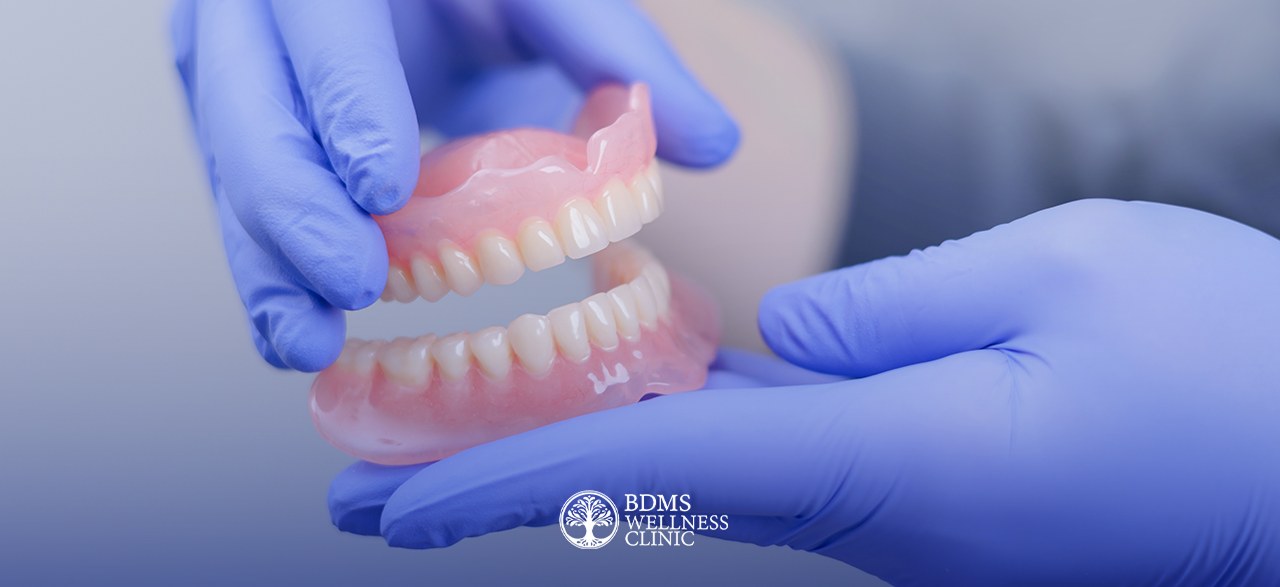
Dentures: A Complete Guide to Restoring Your Smile, Comfort, and Confidence
A modern tooth replacement solution for missing teeth
Missing teeth can affect more than the appearance of your smile. They can also impact how you eat, speak, and feel in everyday life. For many patients, dentures offer a reliable and accessible solution to restore both function and confidence.
Modern dentures have evolved significantly from traditional designs. Today, they can be carefully customised to fit more comfortably, look more natural, and support better oral function. Whether you are missing several teeth or require a full-mouth replacement solution, dentures may be an effective option for restoring your smile.
At BDMS Wellness Clinic, dentures are planned with a focus on comfort, aesthetics, oral health, and long-term wellbeing. Each treatment is tailored to the patient’s needs, lifestyle, and dental condition.
What Are Dentures?
Dentures are removable dental appliances designed to replace missing teeth and surrounding gum tissue. They are custom-made to fit the mouth and help restore chewing ability, speech clarity, facial support, and smile appearance.
Dentures may replace a few missing teeth or a complete arch of teeth, depending on the patient’s condition.
They are commonly used to support patients who have experienced tooth loss due to:
- Gum disease
- Tooth decay
- Dental trauma
- Age-related oral health changes
- Multiple failing teeth
- Previous dental treatment requiring replacement
For many patients, dentures provide an important step toward improving daily comfort and quality of life.
Why Replacing Missing Teeth Matters
Tooth loss can affect the mouth in several ways. When teeth are missing, surrounding teeth may begin to shift, bite balance can change, and chewing may become more difficult. Over time, missing teeth may also affect facial appearance, as the lips and cheeks lose support.
Replacing missing teeth can help support:
| Concern | How dentures may help |
|---|---|
| Chewing difficulty | Restore ability to eat a wider range of foods |
| Speech changes | Improve pronunciation and clarity |
| Facial support | Help maintain natural facial structure |
| Smile appearance | Restore a fuller, more confident smile |
| Oral function | Improve bite balance and daily comfort |
Dentures are not only about aesthetics. They are also part of maintaining oral function and supporting long-term wellbeing.

Types of Dentures
Different types of dentures may be recommended depending on the number of missing teeth, oral health condition, jawbone structure, and patient preferences.
Full Dentures
Full dentures are used when all teeth in the upper jaw, lower jaw, or both arches need to be replaced. They are custom-designed to sit over the gums and restore the appearance and function of a complete smile.
Full dentures may be suitable for patients who have lost most or all of their natural teeth and want a removable tooth replacement option.
Partial Dentures
Partial dentures are used when some natural teeth remain. They fill the spaces created by missing teeth and help prevent surrounding teeth from shifting out of position.
Partial dentures may be recommended for patients who are missing several teeth but still have healthy remaining teeth that can provide support.
Implant-Supported Dentures
Implant-supported dentures are attached to dental implants for improved stability. This option may be suitable for patients who want a more secure fit compared to traditional removable dentures.
Because dental implants are anchored in the jawbone, implant-supported dentures can provide stronger chewing function and reduce movement during speaking or eating.
Immediate Dentures
Immediate dentures may be placed shortly after tooth extraction, allowing patients to avoid being without teeth during the healing period. Adjustments are usually needed as the gums and bone change shape during recovery.
Dentures vs Dental Implants: Which Option Is Right for You?
Dentures and dental implants are both solutions for missing teeth, but they work differently.
| Feature | Dentures | Dental implants |
|---|---|---|
| Type of solution | Removable appliance | Fixed or implant-supported restoration |
| Treatment timeline | Often faster | Usually requires surgical placement and healing |
| Stability | Varies by fit and type | Typically more stable |
| Maintenance | Removed and cleaned daily | Maintained like natural teeth, with professional care |
| Suitability | Good for many tooth loss cases | Depends on bone health and clinical condition |
Dentures may be ideal for patients seeking a non-surgical or more accessible tooth replacement solution. Dental implants may be preferred by patients seeking a fixed, long-term option with greater stability.
In some cases, the best solution may combine both approaches, such as implant-supported dentures.
What Makes Modern Dentures More Comfortable?
One of the most common concerns about dentures is comfort. Many patients worry that dentures may feel loose, bulky, or unnatural. However, modern denture design has improved significantly.
Today’s dentures can be customised with greater attention to:
- Gum shape and jaw structure
- Bite alignment
- Tooth colour and shape
- Facial proportion
- Speech and chewing function
- Long-term comfort
A well-designed denture should feel secure, support natural facial appearance, and allow patients to eat and speak with greater confidence.
The Denture Treatment Journey
Getting dentures involves more than simply taking an impression and creating a replacement set of teeth. A high-quality denture process should include careful assessment, planning, fitting, and adjustment.
Consultation and oral health assessment
The process begins with a dental consultation to assess your oral health, remaining teeth, gums, jaw structure, and treatment goals. Your dentist will determine whether dentures are suitable or whether other treatment options should be considered.
Treatment planning
Your dental team will recommend the most appropriate type of denture based on your needs. If extractions, gum treatment, or other procedures are required before denture placement, these will be included in the treatment plan.
Impressions and bite records
Accurate impressions and bite measurements are taken to ensure the dentures are designed to fit your mouth properly. This stage is important for comfort, stability, and natural appearance.
Design and fitting
The dentures are crafted to match your facial features, bite, and smile aesthetics. During the fitting appointment, your dentist checks comfort, alignment, appearance, and function.
Adjustments and follow-up
It is normal for dentures to require adjustments after fitting. Follow-up visits help improve comfort and ensure the dentures function properly as your mouth adapts.
Benefits of Dentures
Dentures can provide meaningful improvements for patients living with missing teeth.
Key benefits may include:
- Restored smile appearance
- Improved ability to chew
- Clearer speech
- Better facial support
- A removable and accessible tooth replacement option
- Customised design for natural-looking results
For many patients, dentures help restore confidence in social, personal, and professional settings.
Common Concerns About Dentures
Many patients have questions or concerns before choosing dentures. These concerns are normal and can often be addressed through proper planning and follow-up care.
Will dentures look natural?
Modern dentures can be designed to closely match natural teeth and facial features. Tooth shade, shape, and arrangement can be customised to create a natural-looking smile.
Will dentures feel uncomfortable?
Dentures may feel unfamiliar at first, but comfort usually improves as the mouth adapts. Adjustments may be needed to refine the fit.
Can I eat normally with dentures?
Dentures can improve chewing ability, but patients may need time to adjust. Starting with softer foods and gradually returning to a wider diet can help.
Will dentures affect speech?
Some speech changes are possible at first. With practice and proper fit, most patients adapt and speak more naturally over time.
How to Care for Dentures
Proper care helps dentures last longer and supports good oral health.
Dentures should be cleaned daily to remove food particles, plaque, and bacteria. They should also be handled carefully to prevent damage.
Basic denture care includes:
- Removing and cleaning dentures every day
- Brushing gums, tongue, and remaining teeth
- Storing dentures properly when not in use
- Avoiding hot water that may distort denture shape
- Visiting the dentist for regular check-ups and adjustments
Even if a patient no longer has natural teeth, regular dental visits remain important for checking gum health, denture fit, and overall oral condition.
Why Choose BDMS Wellness Clinic for Dentures?
At BDMS Wellness Clinic, denture treatment is approached with careful attention to oral function, aesthetics, and patient comfort.
Patients benefit from:
- Personalised dental assessment
- Treatment planning based on oral health and lifestyle
- A focus on natural-looking results
- Dental care within a modern wellness environment
- Support for both local and international patients
The goal is to create dentures that do more than replace missing teeth. They should help patients feel comfortable, confident, and supported in daily life.
Frequently Asked Questions
What are dentures used for?
Dentures are used to replace missing teeth and restore chewing ability, speech, facial support, and smile appearance.
Are dentures removable?
Most traditional dentures are removable. Implant-supported dentures may be removable or fixed depending on the treatment plan.
How long does it take to get dentures?
The timeline varies depending on the type of denture, oral health condition, and whether extractions or other treatments are required.
Are dentures better than implants?
Dentures and implants serve different needs. Dentures are removable and often more accessible, while implants are fixed or implant-supported and may offer greater stability. The best option depends on the patient’s oral health, goals, and suitability.
Can dentures be made to look natural?
Yes. Modern dentures can be customised in tooth colour, shape, and arrangement to create a natural-looking smile.
Do dentures need regular check-ups?
Yes. Regular dental visits are important to check denture fit, gum health, and overall oral condition.
Explore Related Dental Treatments
Dental Implants
A fixed tooth replacement option anchored in the jawbone, for patients seeking greater stability.
→All-on-4 Dental Implants
Full-arch restoration supported by four implants, for patients missing most or all of their teeth.
→Full-Mouth Rehabilitation
A comprehensive plan that restores bite balance, function, and appearance across the whole mouth.
→Restore Your Smile with Personalised Denture Care
Dentures can play an important role in restoring confidence, comfort, and oral function for patients with missing teeth.
With proper planning, modern materials, and professional care, dentures can provide a natural-looking and practical solution that supports everyday life.
Book a consultation at BDMS Wellness Clinic to explore denture options and find the most suitable treatment plan for your smile.
For more information, please contact
Dental Wellness Clinic tel. +66 2 826 9986 · LINE: @BDMSWellnessClinic
Mon, Thu 08:00–20:00 · Wed 08:00–19:30
Tue, Fri, Sat 08:00–17:00 · Sun 08:00–16:00