

 Appointment
How much... is it called fat? because of obesity It's not just about body weight.
Usually, obesity can be diagnosed using the Body Mass Index (BMI), which is calculated by dividing the weight (kilograms) by the height (meters) twice. If the result The value is in the range of 18.5 - 24.9 kg/m2. Considered proportional, 25 - 29.9 kg/m2 It is considered overweight, and if the value is higher than 30 kg/m2 is considered to be obese.
However, using body weight and body mass index alone May give inaccurate results. This is because the main components of the body include water mass, bone mass, fat mass, and muscle mass. This makes some people even though their body weight is within the normal range (BMI 18.5 - 24.9 kilograms/meter2), but when examining their body composition using Dual-Energy X-ray Absorptiometry (DXA or DEXA), it is found that the body has too much fat stored.
If men have more than 28% fat mass and women more than 32%, they are classified as obese.
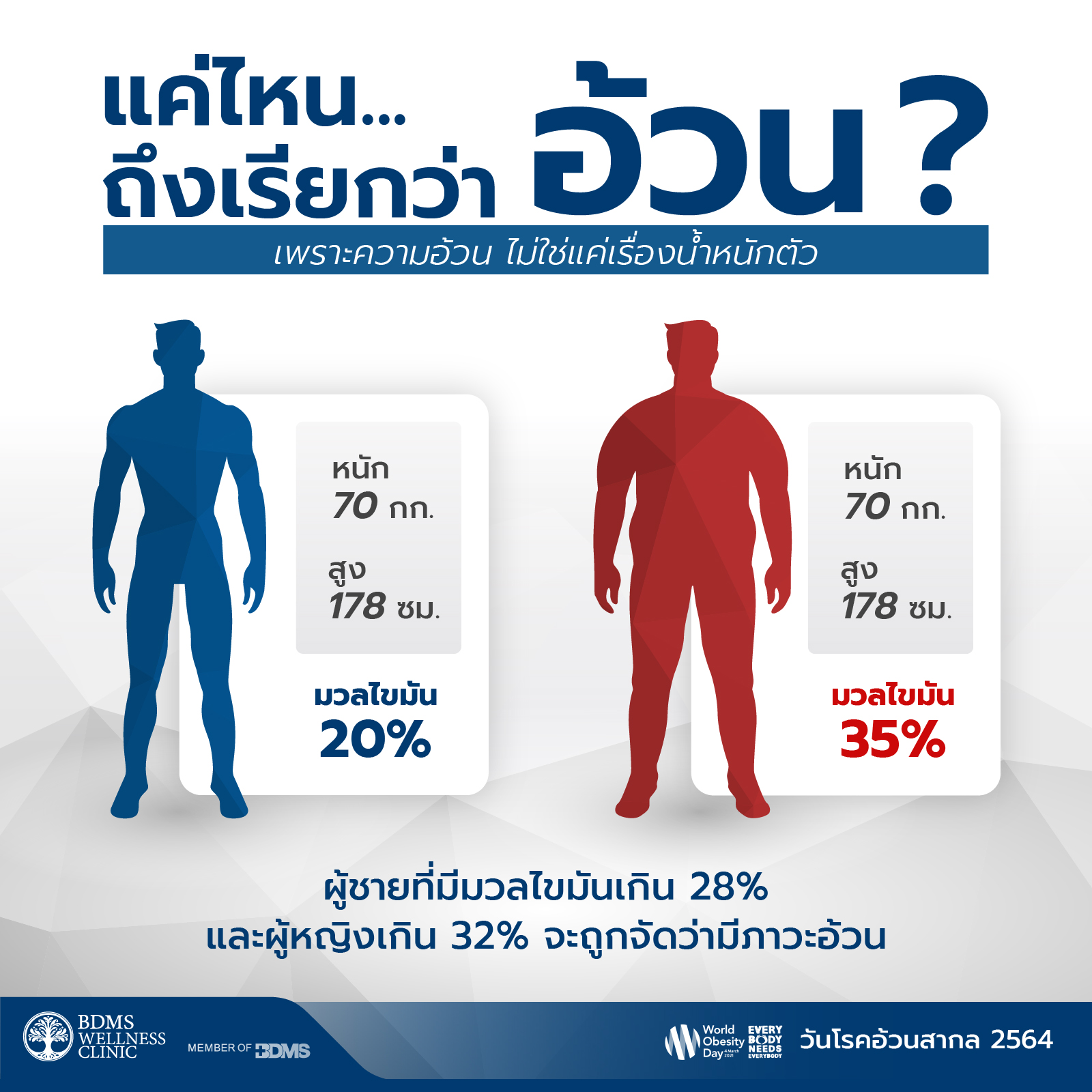
WhichExcessive fat mass usually accumulates in the hips, thighs, upper arms, and most importantly, the abdominal area (Visceral Fat), causing our waist circumference to become larger. Or what we call belly fat. This visceral fat is the most dangerous part because it leads to the risk of Metabolic Syndrome, a major cause of heart disease, diabetes, and chronic non-communicable diseases. (Non-Communicable Diseases; NCDs) many more
Because obesity is not only a weight problem. But it also means accumulated fat mass and various diseases that will follow. We therefore want to campaign for everyone to focus on living a balanced and healthy lifestyle. By eating nutritious food Exercise regularly, don't stress, and get adequate and quality sleep.
Lose weight, reduce belly, reduce risky behavior
Best wishes from BDMS Wellness Clinic
Tel: 028269999
LINE: @bdmswellnessclinic
For more information, please contact
Tel. 02-826-9999 · LINE: @BDMSWellnessClinic · Mon–Fri 7:00–20:00 · Sat–Sun 7:00–17:00