

 Appointment
Beware of "cancer" Ask for If it falls under the category of "obesity"
Fatal "obesity" increases the risk of "cancer"
Obesity scourge Increased risk of cancer

Obesity is one of the leading causes of illness and death for people around the world. Overweight and obesity increase the risk of many diseases such as stroke, obstructive sleep apnea (OSA), joint problems, etc. Weakened immune system, type 2 diabetes Cardiovascular diseases It also increases the risk of 13 types of cancer, such as uterine cancer 7 times, esophageal cancer 4.8 times, liver cancer 2 times, and colon cancer 1.3 times, etc.
According to data in 2020 from the World Obesity Federation, about 1 billion people, or 1 in 7 people, are facing obesity problems, in line with the World Health Statistics 2023 report of the World Health Organization, which reports that 1.9 billion adults, or 39%, are overweight and obese. According to data from the Ministry of Public Health, in 2023, 48.35% of Thai people were overweight and obese, and these numbers continue to rise.
Dr. Amp, Dr. Tanupol Wirulahakarun Chairman of the Board of Directors of BDMS Wellness Clinic and President of the Bangkok Association of Obesity Rehabilitation and Education Promotion Physicians (BARSO) and Special Professor Dr. Teerawut Kuhaprema The director of Bangkok Cancer Hospital, Wattanosot, wants to campaign for society to be aware of the dangers of obesity and stop the increase in the obesity crisis as another way to reduce the number of cancer cases.
Although there are many factors that increase cancer risk, such as smoking, Drinking alcohol, as well as exposure to toxins or pollution, but maintaining a healthy body weight is another important way to reduce the risk of cancer.
What is overweight and obesity
Dr. Amp explained the definition of obesity to us more that overweight and obesity are screened using the Body Mass Index (BMI), with overweight Asians having a BMI of 23 kilograms per square meter or more, and obese people having a BMI of 25 kilograms per square meter or more. In assessing obesity because it is not possible to assess body composition, such as people with the same BMI. For example, bodybuilders have more muscle than people who lack exercise, so BMI is not recommended as a diagnosis alone.
Dr. Amp recommends that other tools should be used, such as measuring waist circumference, because it can indicate fat accumulation. The waist circumference of an adult Asian male should not exceed 90 centimeters (36 inches) and an adult Asian female should not exceed 80 centimeters (32 inches).
However, Dr. Amp recommends that measuring body composition with a DEXA (Dual-Energy X-ray Absorptiometry) machine to assess the total body fat ratio is the most accurate way to assess obesity. Women should not have a fat proportion of more than 32%, and men should not exceed 25%.
How much does obesity cause cancer?
Dr. Teerawut said that obesity is the cause of cancer in 3.9% of the world, accounting for 544,300 cases, of which more cancer cases are found in women than in men (368,500 females and 175,800 males). Obesity is the cause of about 8% of cancers, compared to only 1% in low-income countries.
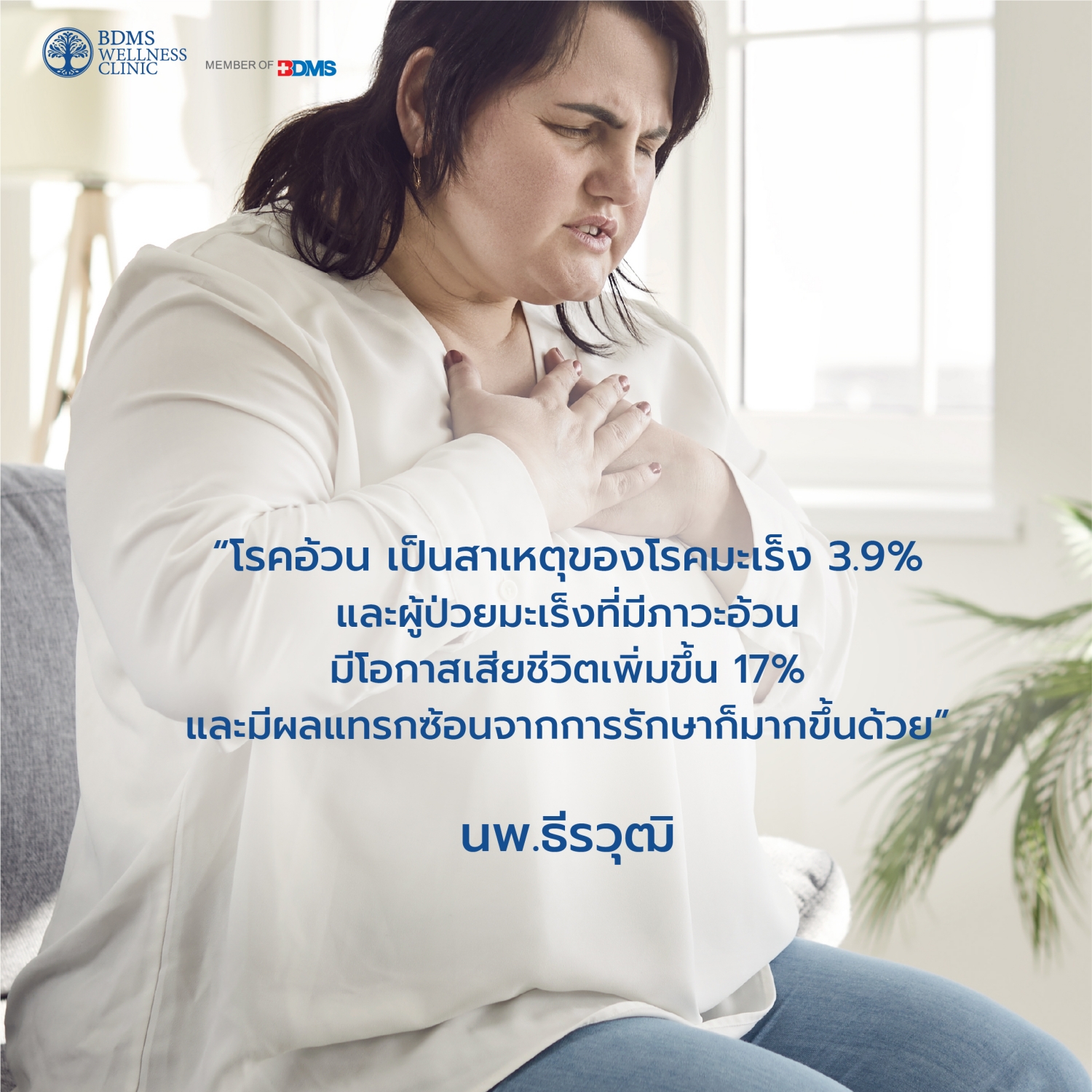
Obesity also has a therapeutic effect in patients with cancer. Obese cancer patients are 17% more likely to die from cancer than non-obese patients, and complications from treatment are also higher, including a 13% higher chance of cancer recurrence, especially in breast and colon cancer patients.
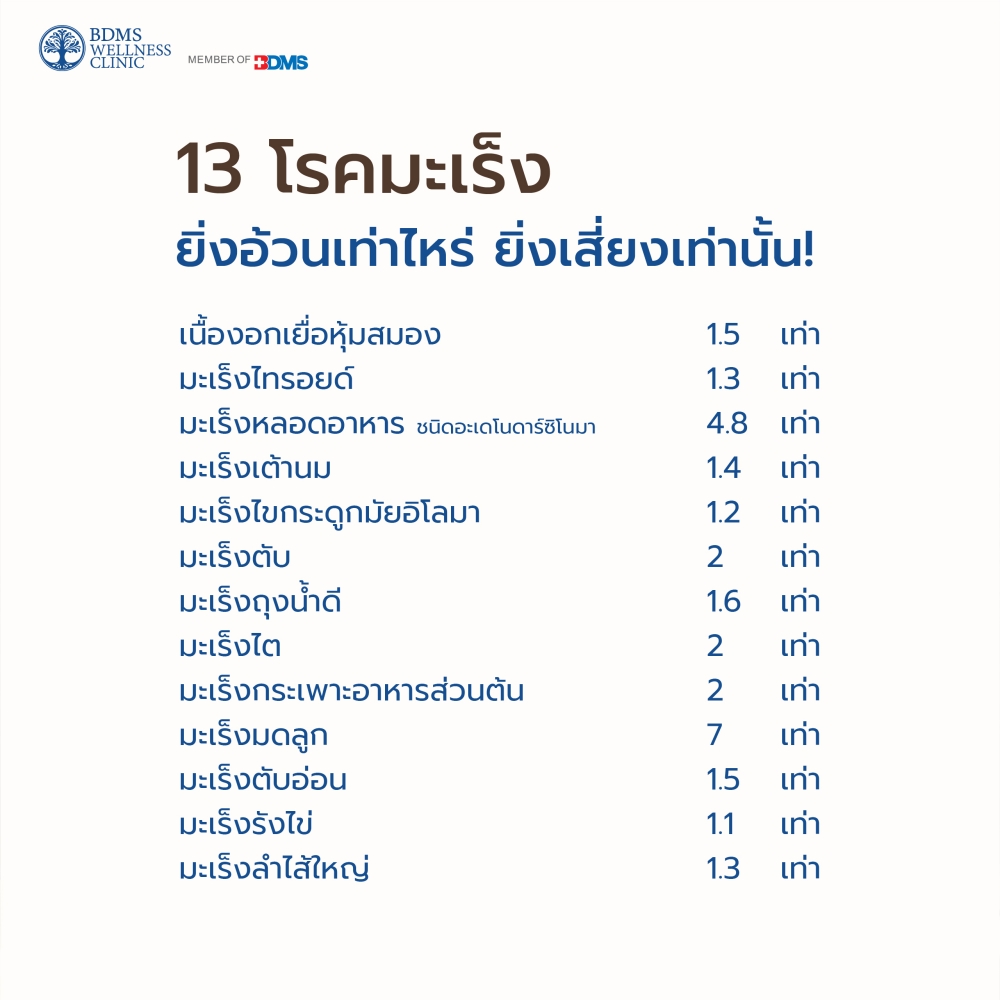
How does obesity cause cancer?
To understand the association of cancer with obesity. Dr. Teerawut explains the mechanism of obesity on the risk of cancer. As follows:
- Adipose tissue Adipose tissue is responsible for the release of chemicals and enzymes in the form of male and female hormones (estradiol and androgen). Endometrial cancer Ovarian cancer and other cancers
- Obesity causes abnormally high levels of hyperinsulinemia and insulin-like growth factor 1 (IGF-1), and obese people often have insulin-resistance, which puts them at risk of diabetes and cancer.
- Adipose tissue Adipose tissue releases a variety of chemicals called adipokine, such as leptin, which cause inflammation and accelerate cell growth. At the same time, obesity reduces the use of adiponectin, which is responsible for inhibiting cell proliferation. Therefore, the cells have abnormal growth and eventually become cancer cells.
- Adipose tissue is also the cause of chronic inflammation, which causes chronic inflammation such as IL-6, TNF-Alpha, and CRP, increasing the risk of cancers such as cancer in the bile ducts. Liver cancer and other cancers. Dipokines also weaken the cancer immune system and alter the environment of the tissues that cause cancer easily. Finally Obesity therefore increases the risk of cancer.
Dr. Amp added that abnormal lipid hormone secretion affects the functioning of the immune system. By reducing the efficiency of NK-cells (Natural Killer cells), a type of white blood cell that helps find and destroy cancer cells, the risk of developing cancer increases with body weight and the length of time a person is obese.
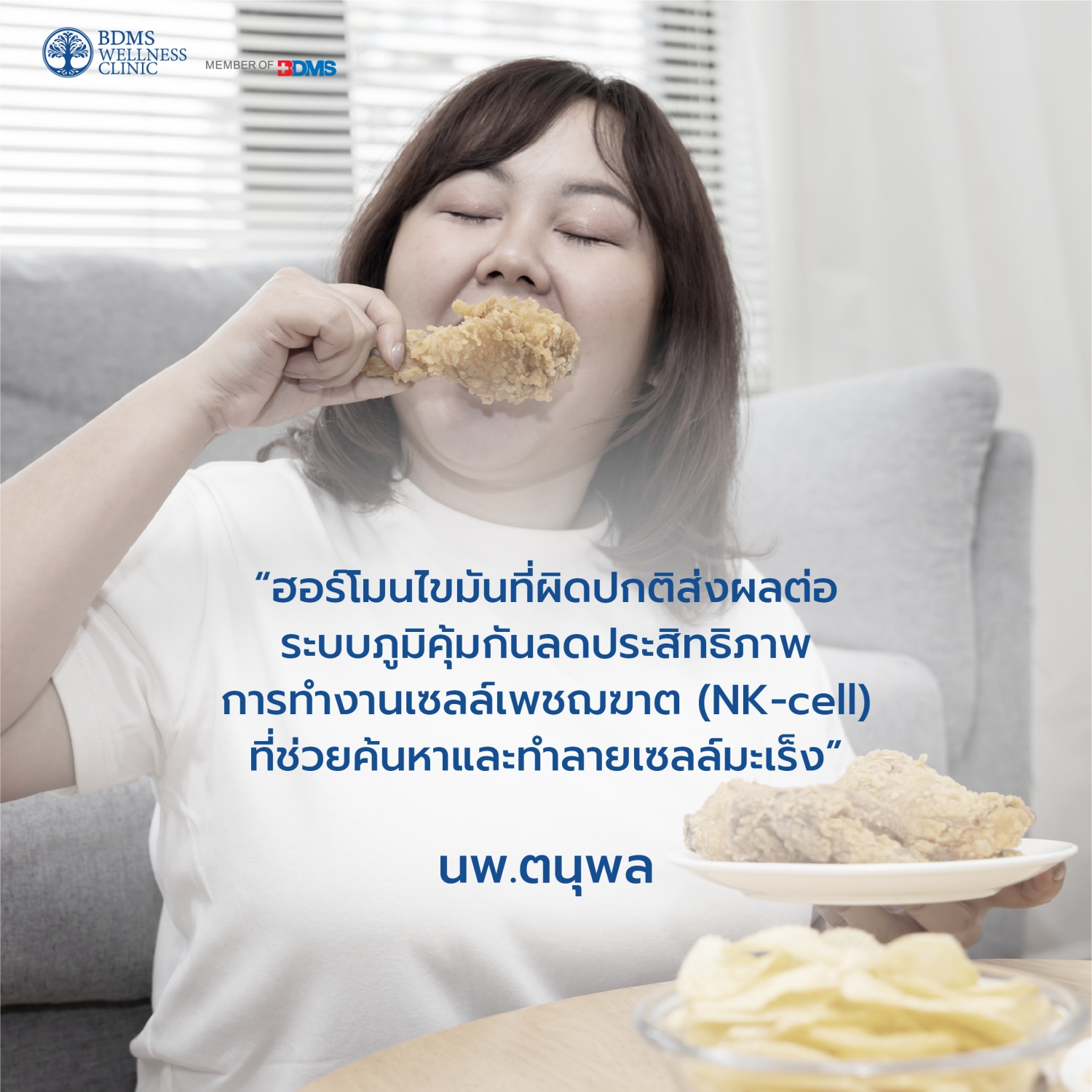
Unhealthy eating habits cause an increased risk of cancer.
Consuming too much energy in excess of the body's needs for a long period of time is the cause of obesity and other chronic non-communicable diseases (NCDs), and not only is excess energy the cause of the problem, but some foods have a clear association with the development of type II diabetes. Cardiovascular diseases and cancer
Data from The International Agency for Research on Cancer (IARC) or the World Health Organization's (WHO) Division of Cancer Research Processed meat is any type of meat that has been preserved by smoking. Salting For example, sausages, salami, ham, bacon, sausages, meatballs, and pork sausages are carcinogenic substances in humans (Group 1), with sufficient evidence in humans that the consumption of processed meat causes colon and stomach cancer.
The culprit is the preservative 'nitrate' or 'nitrite' which is added to the meat processing process to preserve food. However, this substance becomes a carcinogen in the body, forming nitrosamines, a group of N-nitroso-compounds (NOCs). Polycyclic aromatic hydrocarbons (PAHs) that are produced during processing and cooking by baking, grilling, etc.
Red meat itself contains red blood cells or heme iron, which can also accelerate the production of carcinogens such as nitrous oxide compounds (NOCs), as well as high-heat cooking such as frying, grilling, steaks, burgers, and pork pan, which can also cause carcinogens such as heterocyclic aromatic amines (HAAs) and polycyclic aromatic hydrocarbons (PAHs).
There is data to suggest that eating 50 grams of processed meat a day or just 3 spoons of rice It increases the risk of colon cancer by 18% and increases the risk of developing type 2 diabetes by up to 51%.
In addition, High consumption of red and processed meat is a risk factor for obesity. Red and processed meat are classified as high-energy meats with a high amount of cholesterol and saturated fat, and the method of cooking red and processed meat is often oil, butter, sugar, or eaten with carbohydrates. As a result, people who consume red and processed meat are more likely to eat high-energy foods and increase body weight.
Dr. Amp recommends eating a healthy diet along with exercise.
There are many things to do to maintain a healthy body weight and reduce the risk of cancer. Dr. Amp recommends that starting with a healthy diet and exercising regularly can help reduce the risk of obesity and prevent cancer.
Start with a healthy diet
To reduce the risk of cancer Dr. Amp recommends minimizing the consumption of red and processed meats and choosing plant-based proteins such as dried beans (soybeans, peas, chickpeas), white tofu, tempeh, and low-fat white meat proteins such as fish, skinless chicken, egg whites, etc. Whole grains, mushrooms, and choose a variety of tofu or nut protein sources.
Dr. Amp recommends the approach. The plant-based diet, which focuses on eating whole food, plant-based diets, which are less strict than vegetarianism and do not have a fixed pattern, but focus on health by eating a plant-based diet.
There are many studies suggesting that eating Plant-based diet not only reduces the incidence of cancer, but also reduces the risk of developing other chronic non-communicable diseases (NCDs). Cardiovascular diseases High blood pressure, type 2 diabetes, etc.
Reducing the amount of fat from meat also helps to maintain better body weight and increase fiber intake. A study of 9,633 elderly people published in the journal Epidemiology in 2019 showed that the elderly with vegetable intake scores increased. For every 10 points, there is a 2 centimeter reduction in waist and a 1.1% reduction in fat.
Exercise helps reduce cancer cells in the bloodstream.
Regular exercise At least 30 minutes a day, 5 days a week, it helps reduce the risk of many types of cancer, such as helping to regulate hormones that contribute to cancer. Promotes immune system function It accelerates the passage of food in the intestines, thus reducing exposure to carcinogens in the digestive tract and helps control body weight and prevent obesity.
A study published in the medical journal PLoS One in 2018 showed that aerobic exercise for at least 150 minutes per week reduced cancer cells in the bloodstream of patients with stage 1-3 colorectal cancer. This is in line with a study published in the Journal of Clinical Oncology in 2006 that reported that patients with stage 3 colorectal cancer who were physically active reduced the risk of recurrence by 40% and reduced their mortality by 63%.
Keeping Yourself Away from Cancer It requires holistic health care, including food. Exercise, mood, quality sleep, and being in a good environment. Healthy Lifestyle "Because good health is the most important treasure"