

 Appointment
Tips for eating after gallbladder surgery
How to choose to eat safely... While the body is recovering!?
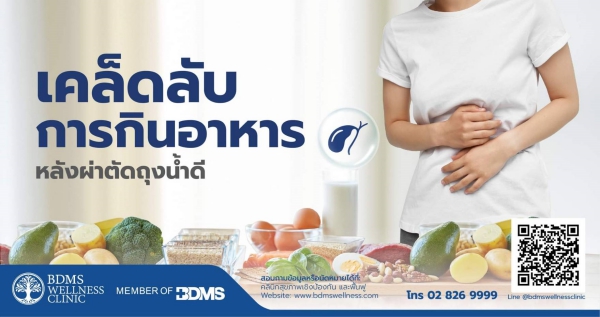
The gallbladder plays an important role in digestion. when we eat The gallbladder will contract. To release all the bile into the digestive tract. And helps digest fat from the food we eat.
Common abnormalities that occur with the gallbladder, such as gallstones or cholecystitis. May cause abdominal pain, bloating, bloating, and some people may experience severe abdominal pain. Nausea and vomiting or have a fever as well Patients are often advised to have their gallbladder removed.
Eating after gallbladder removal
After gallbladder removal. Even though the body can still produce bile normally But the amount of bile and its concentration may not be sufficient for the fat digestion process. Cause bloating, abdominal pain, and diarrhea to reduce adverse reactions that may occur. You should eat the right food according to the recommendations as follows.
- Start by eating foods that are easily digested. During the first week after surgery, such as clear soup, porridge, or rice porridge to monitor whether the body has appetite. And can you digest food normally or not?
- Eat small but frequent meals, reducing the amount of food at each meal. And increase the frequency to 5 - 6 meals/day so that digestion can occur more completely.
- Avoid foods that are high in fat, such as fried food, fatty meats, cheese, butter, etc., by choosing foods with reduced fat content. And it's a good type of fat, such as olive oil and canola oil. Choose to eat low-fat protein sources such as meat, fish, tofu, dried beans, etc.
- Increase dietary fiber intake. Such as whole rice, various cereals, vegetables and fruits because dietary fiber has a positive effect on intestinal function. However, the dosage should be increased slowly to monitor bowel movements. This is because dietary fiber tends to cause wind. May cause stomach pain and bloating.
- Avoid foods that are spicy, high in sugar, caffeine, soda, and alcohol, as these foods often irritate the digestive system. It causes abdominal pain, bloating and even more diarrhea.
- Keep a food journal. This is because each person's body responds differently to each type of food. Keeping a record of symptoms that occur after eating Helps patients choose each type of food better.
The most important thing in taking care of nutrition is eating a healthy diet. Has high nutritional value and have enough energy appropriate to the body's needs Coupled with exercise that is appropriate for your body's condition. Always maintain your body weight within the standard range.
Thank you for the information
- Altomare D, Rotelli M, Palasciano N. Diet After Cholecystectomy. Current Medicinal Chemistry. 2019;26(19):3662-3665.