

 Appointment
Latent sugar in the drink
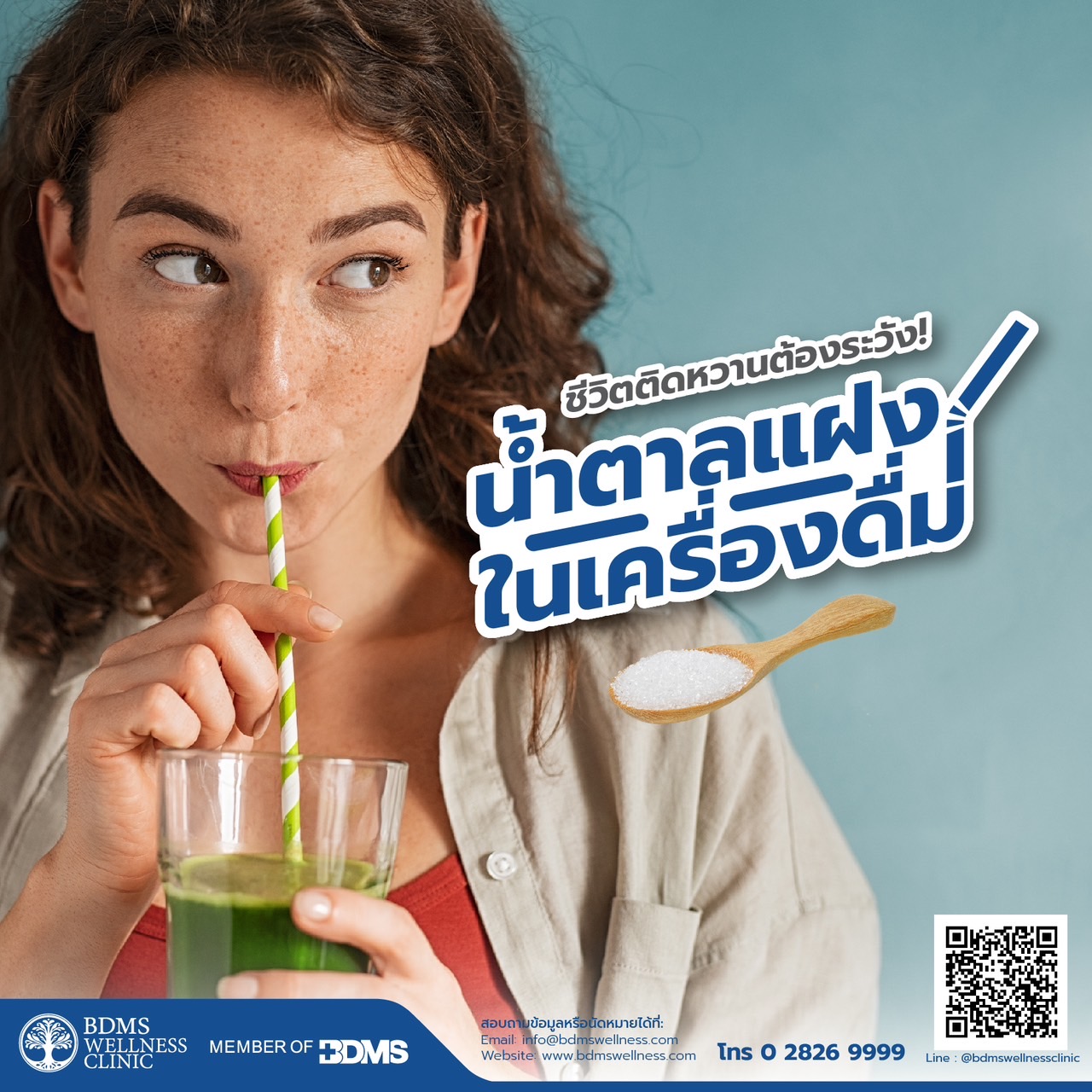
Life is addicted to sweetness, you have to be careful! Latent sugar in the drink
Sugar is used in the food production process. Improve texture and enhance the taste to make it more delicious. As a result, people today tend to consume more sugar. According to the Office of the Health Promotion Fund (HSF), Thai people consume up to 25 teaspoons of sugar per day, which is 5 times more than the amount recommended by the Ministry of Public Health, or 6 teaspoons or 24 grams per day.
Know Hidden Sugar
There are several types of sugar used in the food industry. This causes sugar to be identified on food labels by different names, such as syrup. Honey Corn Syrup Concentrated Juice, Dextrose, Fructose, Sucrose, Corn Sweet Tanner Molas, etc. People often forget that these are sugars as well, so we call this group of sugars 'hidden sugar'.
Drinks with high sugar content
According to research, people underestimate the sugar-sweetened beverages (SSB) of fruit juices or smoothies 48% less than they actually are. Although some fruit-flavored drinks do not contain less sugar than soft drinks. For example, 1 box (180 ml) of mixed fruit-flavored curd contains 6 teaspoons of sugar. While soft drinks in the same volume contain 5 teaspoons of sugar.
Not only children consume latent sugar. Working age groups who drink tea, coffee, or drinks from carts and shops also receive the same latent sugar. According to a survey of sugar content in 37 types of beverages by Mahidol University, the beverage groups according to sugar content are divided into 4 groups as follows:
- Extreme High Sugar SSB When drinking 1 glass (240 ml), more than 14 teaspoons of sugar are obtained.
- High Sugar SSB It contains 13-24 grams of sugar per 100 grams. When drinking 1 glass (240 ml), about 8-14 teaspoons of sugar are obtained: red juice, lemon soda, iced coffee, iced cocoa. Iced Thai tea, chrysanthemum juice Okra juice Quince juice, coconut water
- High-moderate Sugar SSB It contains 7-12 grams of sugar per 100 grams. When drinking 1 glass (240 ml), about 4-7 teaspoons of sugar are obtained: orange juice. Banana smoothie with fresh milk, watermelon juice smoothie Water
- Low sugar group according to the Healthier Choice label guidelines Contains 6 grams of sugar or less per 100 ml, such as low-sugar drinks or sugar-free drinks.Observe the Health Choice mark on the label.of drinks.
Health Risks from High-Sugar Beverages
Several studies have shown that consuming high-sugar beverages is associated with many health problems, such as obesity. Fatty liver Insulin resistance and tooth decay Increased risk of chronic non-communicable diseases (NCDs) such as diabetes, high blood pressure, etc. Cardiovascular diseases, etc.
What is very worrisome is that drinking high-sugar drinks among children and adolescents because it not only leads to long-term health problems. Because teenagers who consume high-sugar beverages tend to drink milk and consume less healthy foods, it is possible that teenagers in this group are deficient in calcium and vitamins that are necessary to build bone mass.
Simple sugar reduction techniques
You have to admit that food on the market today has a lot of hidden sugar. This can make it difficult to cut out sugar completely. However, the drink is one of the largest sources of sugar in our diet. If you can abstain from these drinks, it helps us get less sugar.
So, start by reading nutrition labels, or look for the 'healthy choices' mark. Whenever you buy a drink or try to order the sweetness level to reduce it to 25%, you can easily avoid the hidden sugar that comes with the drink to take care of our health. Reduce the occurrence of future health problems.
References
- Pimnapanut S, Piyanut S, Prapasri P, Yupaporn N, Prapaisri S. Sugar Content in Sugar-sweetened Beverages Sold in and Surrounding University: Case Study at Mahidol University, Salaya Campus. Journal of Public Health. 2019
- Boulton J, Hashem KM, Jenner KH, Lloyd-Williams F, Bromley H, Capewell S. How much sugar is hidden in drinks marketed to children? A survey of fruit juices, juice drinks and smoothies. BMJ Open. 2016;6(3). doi:10.1136/bmjopen-2015-010330
- Haque M, McKimm J, Sartelli M, Samad N, Haque SZ, Bakar MA. A narrative review of the effects of sugar-sweetened beverages on human health: A key global health issue. Journal of Population Therapeutics & Clinical Pharmacology. 2020;27(1). doi:10.15586/jptcp.v27i1.666