

 Appointment
Hepatitis B can be infected without realizing it.
More than 254 million people around the world live with hepatitis B, and more than 90% are still blind to the health disaster that comes with it.
Hepatitis B Infected without realizing it! More than 254 million people around the world live with #HepatitisB, and more than 90% are still blind to the health disaster that comes with it.
Hepatitis B virus (HBV) is a serious infectious disease. It does not show symptoms in the early stages, but if left for a long time, it can cause many complications. Vaccine prevention is the best option, along with hygiene care to minimize global infections by 2030.
Hepatitis B virus (HBV) is a chronic infection that is one of the world's major public health problems. In the early stages after exposure, no symptoms are shown, but over time there may be yellowing of the skin. Yellow eyes, dark urine, pain in the abdomen, which can cause acute hepatitis and acute liver failure. In the long term, it increases the risk of complications such as cirrhosis. Liver cancer and ultimately increases the chance of illness and death.
A recent report from the WHO revealed that there were about 1.23 million new cases in 2022 worldwide, bringing as many as 254 million people living with the disease at the moment, but 9 out of 10 people living with the virus are not yet aware of the health problems or possible physical effects in the future.
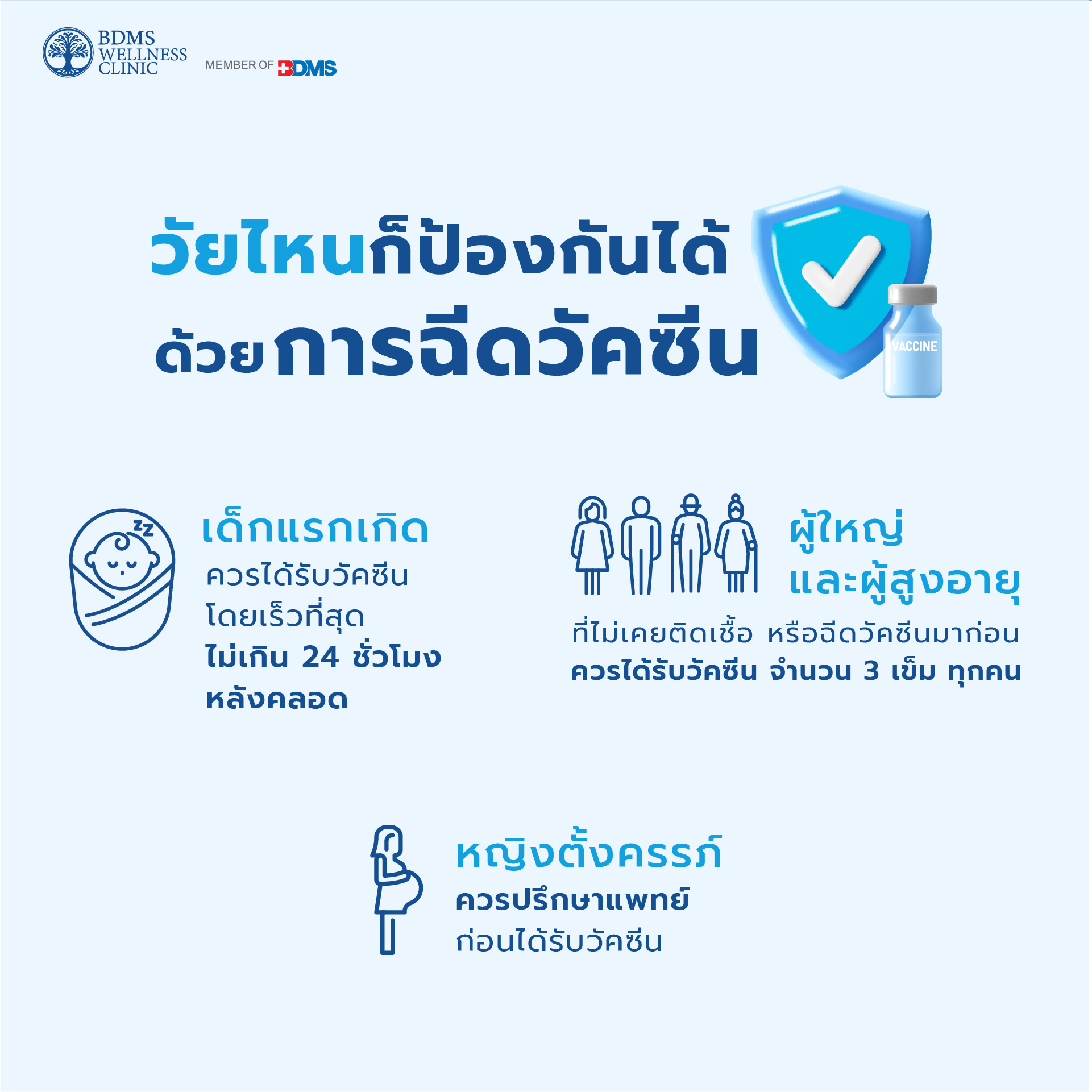
Another terrible disease is exposure because it is most often transmitted from mother to baby during pregnancy (Perinatal Transmission). The best prevention of spread is 'getting vaccinated', which the Ministry of Health recommends. As follows:
- Newborns - should be vaccinated as soon as possible and must be given within 24 hours of birth.
- Children born to hepatitis B carrier mothers - After being fully vaccinated, you should take an immunity test against hepatitis B at the age of about 9-12 months to confirm that you are immune and not infected with this virus.
- Adults and the elderly - people who have never been infected or have been vaccinated before. Everyone should be vaccinated by intramuscular injection for a total of 3 times, at 0, 1 and 6 months, respectively.
- Pregnant women – This vaccine is safe, so you should consult a medical professional before receiving the vaccine.
Caution: Vaccination should be used in people with yeast allergies and people with chronic kidney disease. It should be under the supervision of a doctor.
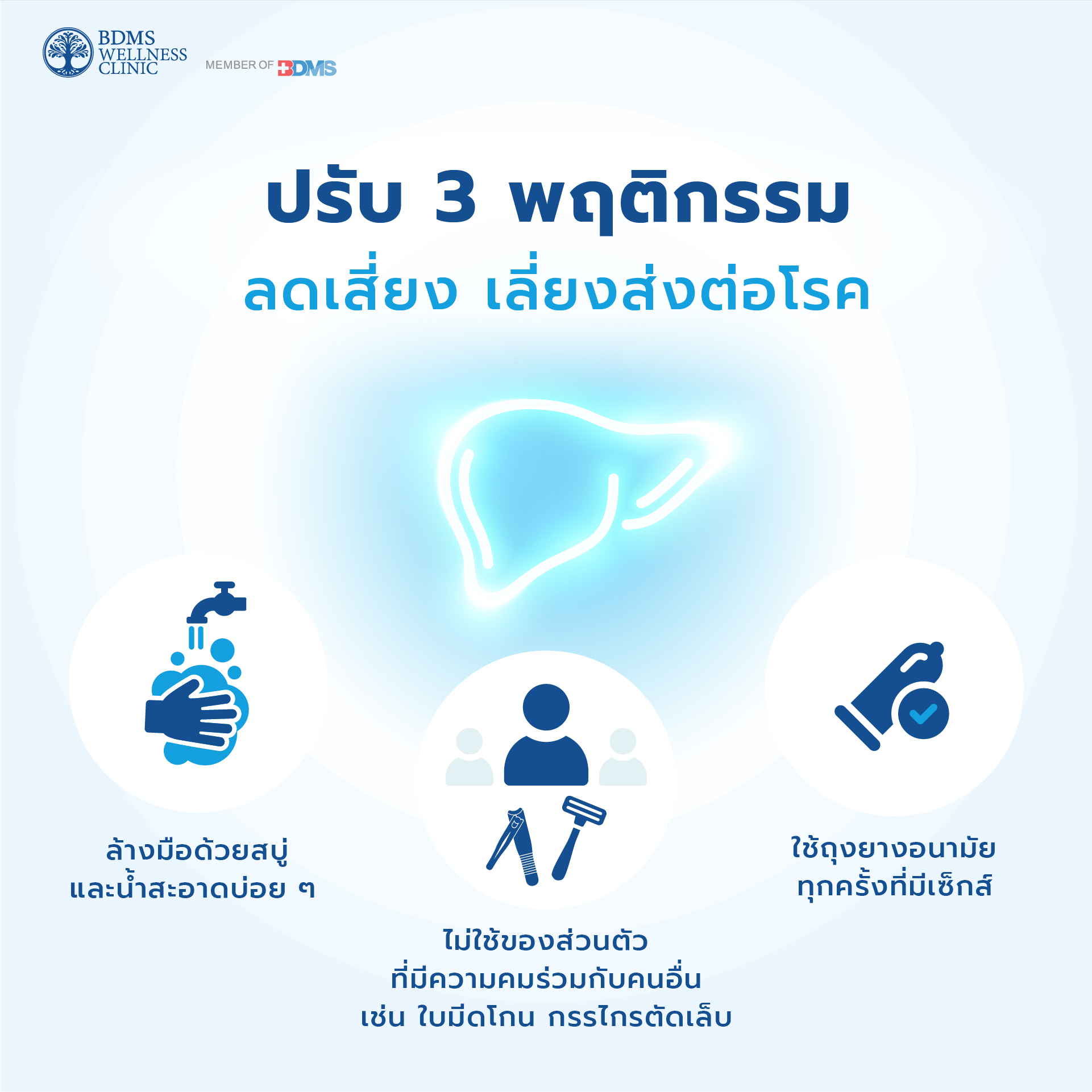
In addition to receiving the hepatitis B vaccine. Promoting good hygiene will help strengthen our barrier against this infection.
- Washing your hands regularly with soap and clean water
- Using condoms during sex
- Avoid sharing sharp personal items with others, such as razor blades, nail clippers, toothpaste, earrings, etc. Jewelry that must be pierced on the body reduces the risk factors of contact with the secretions of infected people.
Due toJuly 28 coincides with World Hepatitis Day. (World Hepatitis Day) that focuses on integrating knowledge building and paving understanding. Eliminate hepatitis to minimize serious public health problems by 2030.
Reference List
- WHO. Global hepatitis report 2024: action for access in low- and middle-income countries. Geneva: World Health Organization; 2024. Licence: CC BY-NC-SA 3.0 IGO.
- Disease Immunization Enhancement Plan Ministry of Health. Vaccination schedule according to the Ministry of Public Health's Immunization Plan 2024 [Internet]. Nonthaburi Disease Immunization Promotion Plan Division of General Communicable Diseases, Department of Disease Control Ministry of Health: 18 December 2023 [Accessed 14 June 2024]. Accessed from https://ddc.moph.go.th/dcd/journal_detail.php?publish=15103
- Infectious Diseases Society of Thailand. Vaccination recommendations for adults and the elderly [Accessed June 14, 2024]. Accessed from https://www.idthai.org/Contents/Views/?d=!17!9!!954!